
In a recent post I mentioned that the deal engineers get is going to get worse over time, and I used my time at DEC as an example. I think it’s worth going deeper on that. What happened at DEC isn’t just history — it’s a playbook. And I believe you’re going to see it run again.
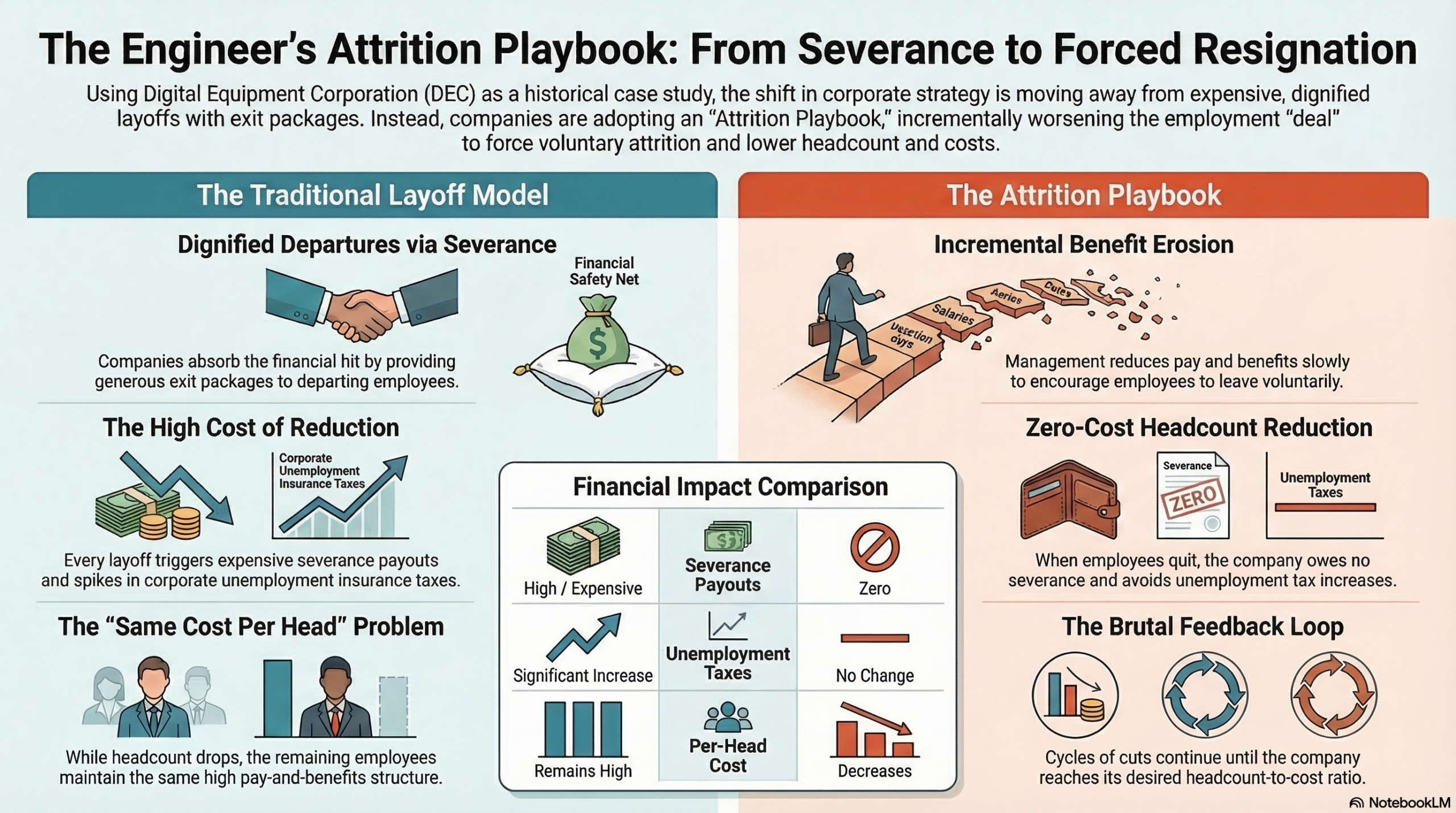
Over my eight years at DEC, the deal got progressively worse. New England went into a depression, DEC’s market position slipped, and the company needed to cut costs. At first, they handled it the way you’d expect a generous, engineering-driven company to handle it: layoffs with genuinely good severance packages. People left with dignity. The company absorbed the hit.
Then things changed. Nobody announced the change. Nobody explained it. But when I reverse-engineered the logic, here’s what I concluded.
DEC was spending too much on people. The layoff approach had three concrete problems:
1) The severance packages were expensive.
2) Unemployment insurance taxes went up every time they ran a reduction.
3) Risk of an unlawful termination lawsuit.
4) When the dust settled they had fewer people still carrying the same pay-and-benefits structure. Same cost per head. Fewer heads.
Not the math they needed.
So someone made a different decision. I believe it was explicit. The logic goes like this: we offer a compensation package, that package attracts a certain level of employment at a certain cost, and both numbers are too high. Instead of running layoffs, let’s just reduce the benefits and pay — incrementally — until the numbers come out right.
The mechanism is elegant in a brutal way. When you cut pay and benefits, some people quit. When they quit, you owe them nothing — no severance, no unemployment tax spike. And if they don’t quit, you now have the same headcount at lower cost. Run the cycle again. Keep going until you like what you see.
That’s the playbook.
Learn to recognize it.
In the short run, it hurts. In the long run they did you a favor, and you ended up in a better place. Congrats!
So absolutely true for many companies. Then new hires get an inferior benefits package.
Thanks for posting this, it’s happening here too. They think they can still generate record profits for themselves while reducing their “peon count” over time. It works until it doesn’t I guess. Queue the increased contingent workers count and AI assist until meaningless cycles are all that is generated.
Thanks,
Long Time Fan
Been there, done that.
If you have a commission or bonus component to your pay it’s easier to pull off, they don’t have to touch your base rate.
Or they can decide to make your job miserable – if you are an engineer, for instance, they might increase the job component where you have to work with sales.
Or they can keep putting you into tire-fire projects to “rescue” them. If you’re not able to pull enough of those out, they can point at a “string of failed projects”. This process can be helped along by not giving you the budget you need to fix a failing project.
Lots of terrible games terrible people can play with other people’s livelihoods