
I’ve been doing Office Hours and the topic of AI has been in almost every one of the conversations. Everyone is wondering what the right play is with AI. A number of people are concerned about it replacing them. I’ve been giving the following advice, “Treat AI as an awesome teammate”
I was telling someone recently that I studied Physics & Philosophy and that Philosophy taught me the art of asking great QUESTIONS, while Physics taught the art of creating great ANSWERS. So let’s start with a great question: What is a Team?
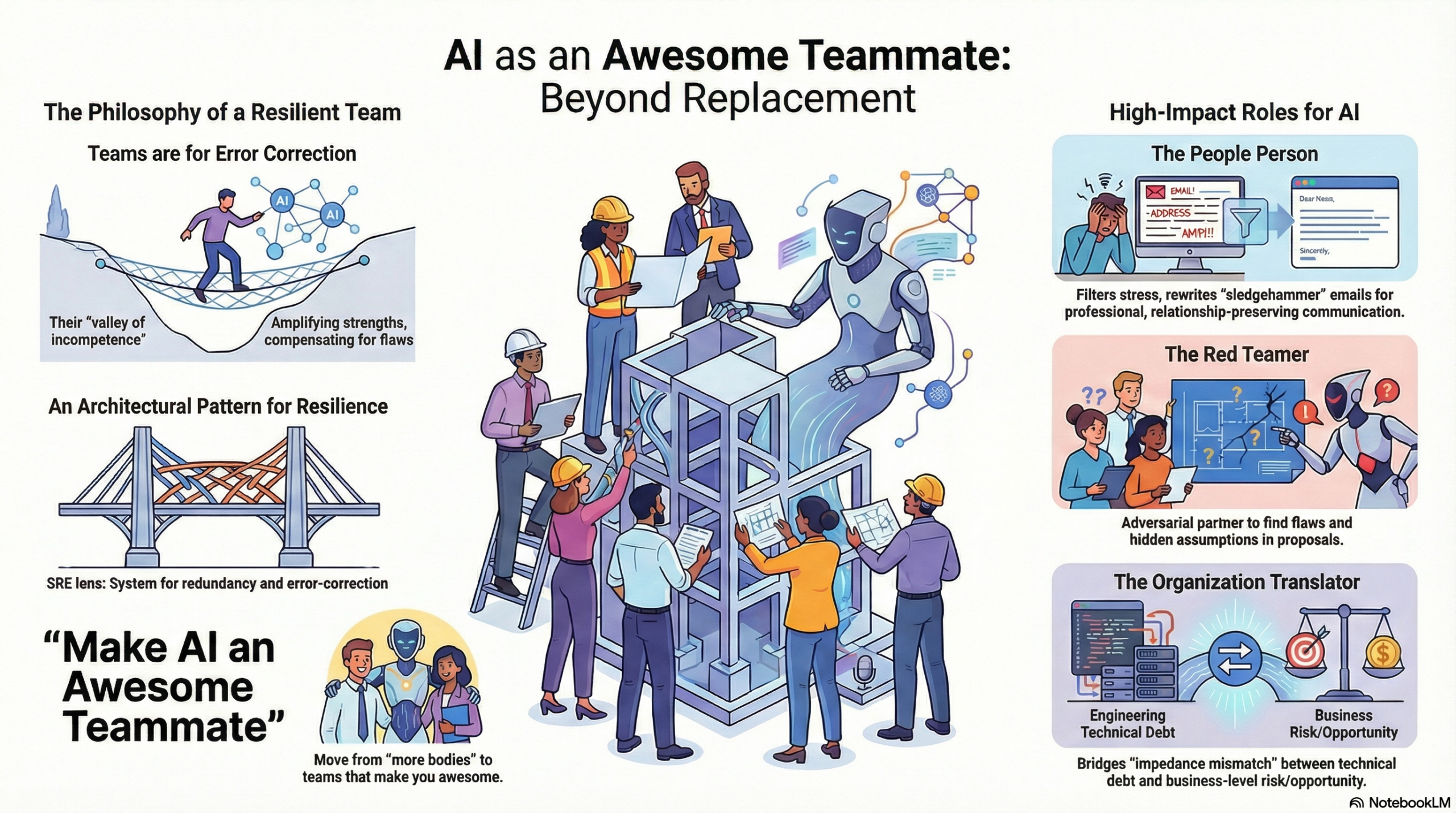
We don’t build teams just to have more bodies in the room. We build teams because we are all flawed. Every single one of us has peaks of high capability and deep valleys of incompetence. The theory of a team is that it is a structure designed to amplify our strengths and compensate for our weaknesses. Putting my SRE hat on, you can view it as an architectural pattern for resilience and error correction.
If you stop looking at AI as a threat and start looking at it as a teammate, the dynamic changes. You figure out how to use it to compensate for your weaknesses. As I’ve said many times, I am a deeply flawed human (that is why you can use wildcards everywhere in PowerShell) so I need awesome teammates to function.
Here are some of the ways I use AI as an awesome teammate to compensate for my own weaknesses and amplify my strengths.
The People Person
Great teams always have an awesome people person (think Deanna Troi). When I am under stress and can connect the dots between where we are and failure, I have a history of going into “streamroller mode”. That can bring short term success but there can be a lot of damage in the process and I’ve spent a lot of time fixing that but…sometimes…I slip. In plain English: I sometimes write brutal emails. In these situations, I need a good people person to review and do an edit pass on my emails.
Not long ago, I had to deliver a difficult message to someone under a severe time crunch. I wrote the email. I reread it. It was super clear. It was honest. But it was as subtle as a sledge hammer.
In the old days, I might have just sent it and dealt with the fallout later. This time, I pasted it into Gemini. I said, “I need to deliver the hard message in this email, but I also need to preserve and improve the working relationship. Please rewrite this.”
It did a fantastic job. It kept the signal but removed the noise of my stress. It compensated for my weakness at that moment. It allowed me to be the leader I wanted to be, rather than the stressed-out engineer I was acting like.
The “Red Teamer”
We all fall in love with our own ideas. It’s human nature. We get tunnel vision. We convince ourselves that our logic is sound because we wrote it.
I was recently writing a proposal. I knew it was solid. I was sure that AI would agree but decided I would verify that. I pasted the entire thing into Gemini and said, “Review this proposal from the Point of View of the audience. Critique it. Find the flaws. Be harsh.”
It came back with a list of issues that I had completely missed. It pointed out assumptions I was making that the audience wouldn’t share. It found the holes in my argument before the customer did.
It acted as a “Red Teamer”—an adversarial partner that made the final product stronger through stress testing..
The Translator
The biggest point of friction in any organization is the impedance mismatch between engineering and the business. You have engineers talking about technical debt and refactoring, and managers talking about resource allocation and opportunity costs, marketing people are talking about differentiation and Go To Market , etc. etc. It is a same planet, different worlds situation.
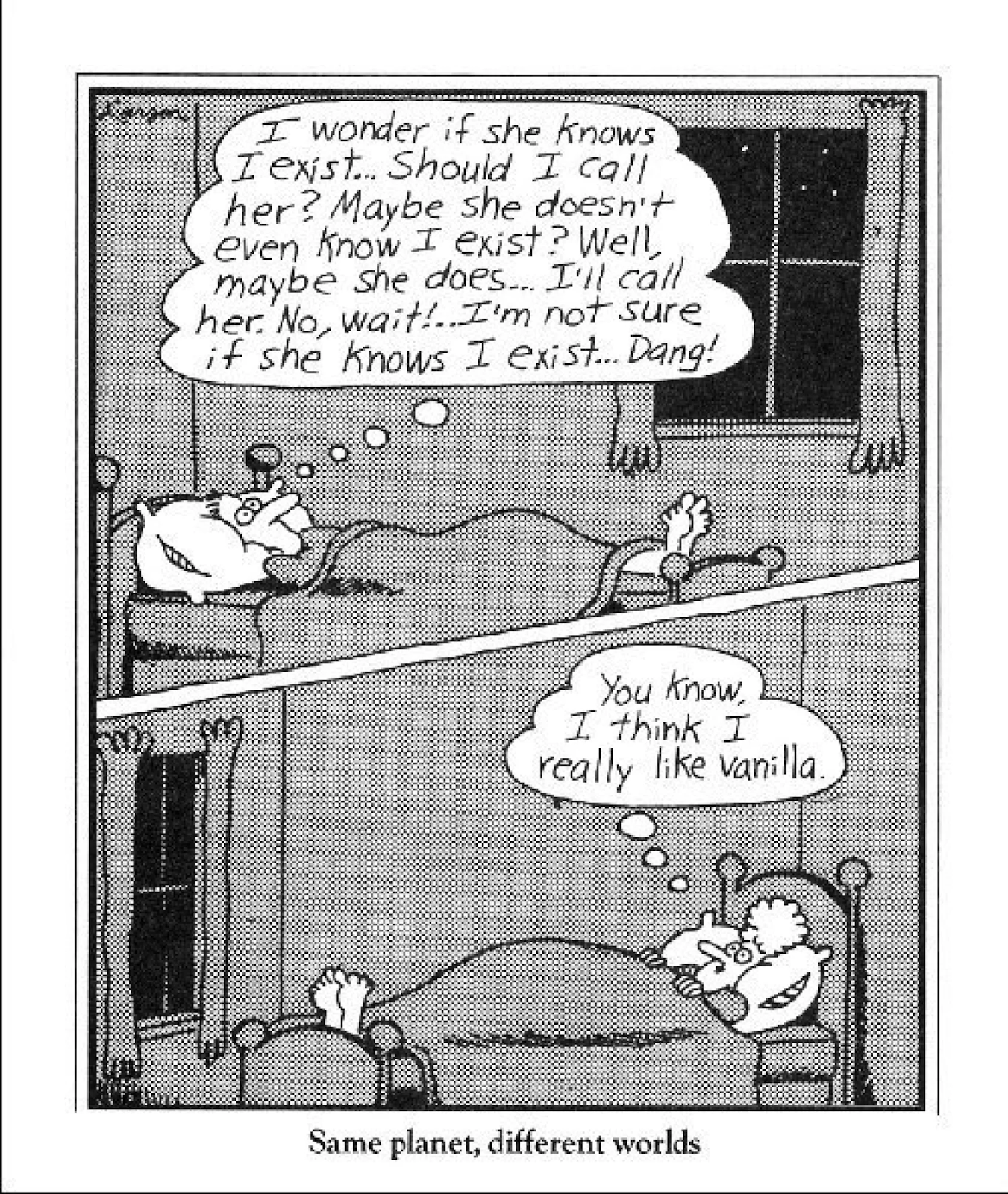
AI can be your Translator. It helps you translate your deep technical reality into language the CFO, the Legal team, or the Marketing intern can actually understand. You need to speak into their listening. Said another way, everyone needs to hear things differently to all hear the same thing. You can give your project proposal to AI and ask it, “How do I explain the business risk of not doing this technical debt reduction process? What additional information do I need to provide and how do I frame the discussion?”
The Sounding Board
One of the biggest barriers to progress is ego. It’s the fear of looking incompetent.
I think we all tend to hesitate before asking, “Wait, how does this work?”. Partly because you expose your ignorance but also because you don’t want to waste someone’s time. So …. I have a friend… that bluffs and then wastes hours digging through documentation to save face.
But AI is an awesome teammate that will never judge you, never roll its eyes, and never gossip about your ignorance. It allows you to ask the “stupid questions”. I’ve been getting ready for the Materials Research Society Conference and have been using Gemini to refresh my Physics and Chemistry. I ask it to explain it to me at the High School level. Then when I get that I focus, I ask for a college level explanation. I took all the abstracts for a particular track and asked it to generate a briefing document to get me grounded in the core concepts. It was awesome.
It allowed me to walk into the room confident, not on my heels. It compensates for the all too human weakness of pride.
Having explored a great question, let’s finish with a great answer:
AI is not about replacing everyone except hairdressers and plumbers.
Don’t build a team of more bodies.
Build a team that makes you awesome.
Make AI an awesome teammate.
Thanks
I think I need an AI speech filter.
Maybe next generation?
That’s all swell, but AI hallucinates _a lot_. I posit that LSD can be safer in many scenarios.
😉
Does AI hallucinate – absolutely.
But think back to your last exec review and ask yourself the question:
Do AIs hallucinate more or less then execs?
It certainly varies by the exec but they hallucinate ALL THE TIME!
Having been on the end of one of those rare steamroller events many years ago, this is terrific advice and insight.
Having an uninterested 3rd party provide feedback, without regards to ego or feelings is tremendously beneficial. As long as one is willing to set aside their own ego. Something about AI providing the feedback makes this easier. For me at least.
Sorry about that Calli!